Dark, Horror Color by Number
- 4.7
- Rating
- 5.00M
- Installs
- Free
- Price
 Analysis by App-foxy
Dark, Horror Color by Number is the kind of board game I open when I want something quiet, visual, and slightly unsettling rather than competitive. Its main appeal is simple: it turns coloring into a dark-themed puzzle, with eerie artwork replacing the cheerful animals, flowers, and landscapes found in many ordinary coloring apps. I found the experience easy to understand almost immediately, but the mood gives it a more distinctive identity than a standard color-by-number title.
The game comes from Fancy Games Studio and is free to install, with optional purchases ranging from $0.49 to $59.99 per item. It is aimed at Teen users, which makes sense for the horror presentation even though the basic activity remains relaxed and nonviolent. The app has reached over five million installs and holds a 4.7 average from around 45 thousand ratings, so it clearly appeals to a sizeable audience beyond people looking for a traditional board game.
Why the dark coloring concept works
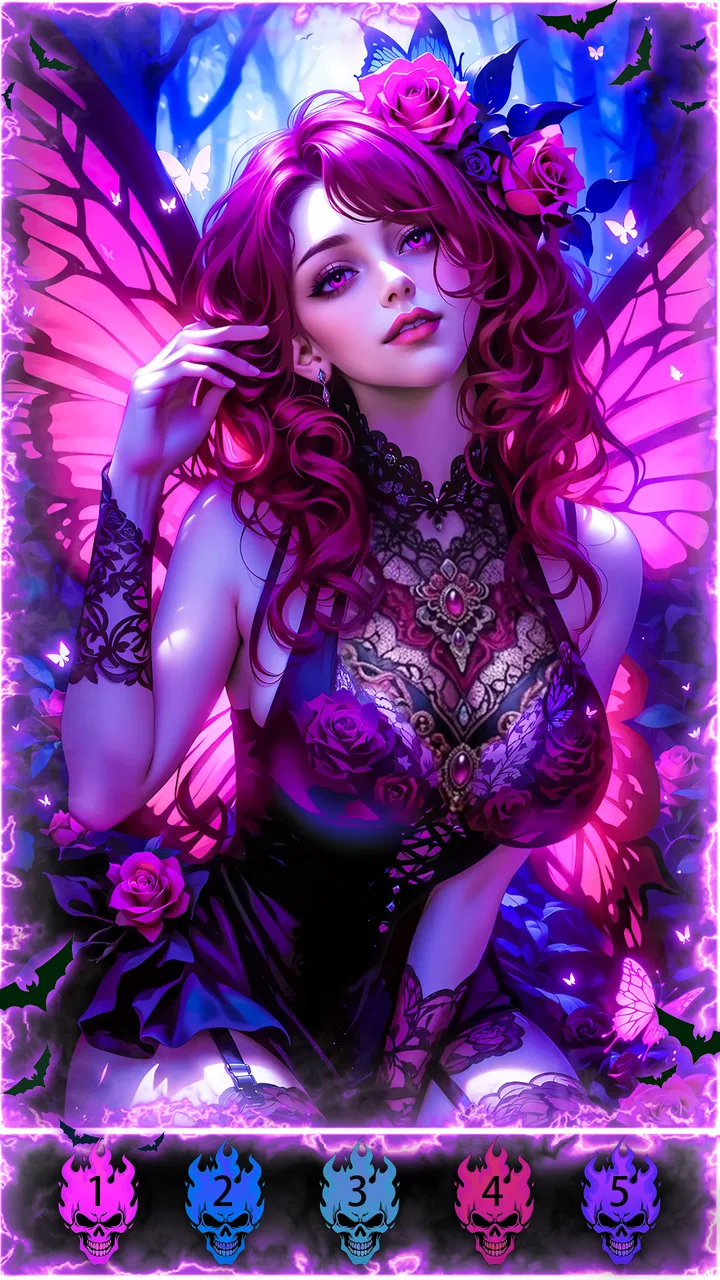
The most important capability here is not simply filling numbered spaces. It is the way the game uses a gothic visual style to change the feeling of a familiar activity. In a brighter coloring app, I usually expect the result to be cute or decorative. Here, the completed images are designed to feel mysterious, creepy, or dramatic. That difference matters because it gives me a reason to return when a conventional coloring book feels too soft or repetitive.
You May Also Like

 Blood Strike: 2.5 Anniversary
Blood Strike’s Loadouts Turn Every Drop Into a Tactical Gamble
A close look at Blood Strike’s custom loadouts: how fast access to signature weapons reshapes its battle royale rhythm, rewards preparation, and narrows the gap between fights.

 Pandora - Music & Podcasts
Pandora’s Music Is Easy to Start, but Harder to Recover
Pandora’s strength is its low-effort path from a seed to a station. Its weak spot is how much confidence it asks you to place in connection, setup, and quiet recovery.

 8 Ball Pool
 Is Built on Rivalries, Rematches, and Routine
A close look at the rivalries, rematches, shared routines, and unanswered safety questions that turn a quick pool match into a persistent mobile community.

 Samsung Music
’s Quiet Strength Is Playing What You Already Own
Its reach comes less from spectacle than from dependable access to a personal library. That simplicity is both the app’s strongest retention engine and its ceiling.

 AccuWeather: Weather Radar
AccuWeather Review: A Quick, Clear Forecast for Everyday Decisions
For everyday plans, the best forecast is the one you can understand quickly. AccuWeather makes rain timing, radar, and local conditions easy to act on, with a few trade-offs.

 Hill Climb Racing
Why Hill Climb Racing Still Turns Crashes Into One More Run
A tiny car, a bumpy hill and one more upgrade: Hill Climb Racing keeps resurfacing because its simple chaos makes every near-miss feel personal.
More From Our News Desk



The store summary also points toward a broad mix of dark scary coloring, summer scenes, and beach artwork. That combination is more unusual than it first sounds. The horror side provides the app’s identity, while the lighter seasonal material can make the collection less intense when I want a change of pace. I would not describe the whole experience as relentlessly frightening; it is better understood as coloring with a gothic edge.
The dark theme is most effective when you want a calming activity with a little atmosphere. It does not turn the game into a horror adventure, and I would not install it expecting a story, exploration, or suspenseful surprises. The tension comes from the artwork and presentation, not from being chased, solving a narrative mystery, or making strategic decisions against another player.
That distinction is useful before downloading. Someone searching for a board game with deep tactics will probably find the interaction too limited. Someone who enjoys digital coloring but wants images with more personality may find the theme refreshing. In my experience, the concept works because it keeps the familiar number-matching structure while giving the finished pictures a stronger emotional tone.
How the coloring process feels in practice
The basic workflow is approachable. I choose an image, look for the numbered areas, select the matching color, and fill the spaces by tapping. This makes it suitable for short sessions because I do not need to learn a complicated ruleset before starting. The board-game classification feels more like a description of the structured puzzle format than a suggestion of a conventional tabletop match.
At first, the numbered sections are the main focus. As more of the picture fills in, the image becomes easier to read and the remaining gaps stand out more clearly. That creates a small sense of progress without requiring a timer or a demanding score chase. I often find myself beginning with the obvious larger areas, then moving toward the tiny sections once the overall design is visible.
That order is not just a matter of convenience. Filling large regions first gives me a visual map of the picture and makes it easier to notice where a small uncolored section belongs. If I start by hunting randomly for tiny spaces, the session feels slower and more tiring. For detailed horror artwork, I get better results by working from broad shapes toward the fine details.
Another useful habit is to treat the image as a series of small checkpoints rather than trying to finish it in one sitting. I can complete a few clusters, pause, and return later without needing to remember a complicated position. This is where the game fits everyday use particularly well: it can occupy a short break, a quiet evening, or the final few minutes before putting the phone down.
The interface is likely to feel most comfortable on a phone or tablet where the numbered areas are easy to distinguish. On a smaller display, detailed pictures can demand more precise tapping, especially when several sections sit close together. I would choose a larger screen if I were planning long sessions, not because the game becomes fundamentally different, but because the artwork is easier to inspect and the small spaces are less frustrating.
The coloring format also means that the game’s challenge is gentle rather than strategic. I am mainly managing attention and accuracy. That can be a strength when I want to relax, but it can feel repetitive if I need constant novelty or meaningful decisions. The satisfaction comes from revealing the image, not from discovering an optimal move or outsmarting an opponent.
A realistic use case for a quiet evening
Imagine coming home after a busy day with enough energy for something to do, but not enough patience for a competitive game. This is where I see the strongest use case. I can open a dark illustration, work through the numbered sections, and let the picture develop without following a story or reacting to other players. The gothic art gives the activity more character than a blank digital canvas, while the number system keeps the task clear.
It also suits people who enjoy horror aesthetics but do not necessarily want frightening gameplay. The images can provide a spooky mood without asking me to handle jump scares, combat, or complicated puzzles. That makes it a gentler way to enjoy dark visual themes. I would still keep the Teen rating in mind when choosing it for a younger family member, since the presentation is intentionally aimed above a child-friendly coloring book.
For a short session, I would pick an image with recognizable shapes and stop after completing a satisfying section. For a longer session, I would choose a more detailed design and use the gradual reveal as the main activity. This approach prevents the game from becoming a chore. The point is not to rush through every available picture, but to use the coloring process as a low-pressure break.
The seasonal and beach-oriented artwork can also help when the horror mood becomes too narrow. I would not assume that every picture has the same tone simply because the title emphasizes darkness. The collection appears designed to let players move between unsettling images and lighter summer-inspired scenes. That variety is important for long-term use because a single visual mood can become tiring if it is the only option.
Where the trade-offs become noticeable
The biggest limitation is also the source of the game’s identity: the coloring format does not offer much variety in the way I interact with each image. Once I understand the number-and-color routine, the main difference between sessions comes from the artwork. If I enjoy that rhythm, it feels soothing. If I need changing mechanics, multiplayer competition, or a stronger sense of progression, the experience may seem shallow beside other board and puzzle games.
There is also a difference between free access and a completely unrestricted experience. The game is free, but optional purchases are part of the model. I would approach it as a free way to sample the style rather than assuming that every desirable piece of content will be available without spending. The sensible approach is to play enough to decide whether the core coloring loop holds my attention before considering any purchase.
Those optional items may be more attractive to a committed fan of the artwork than to a casual user. If I only want something for occasional breaks, the free experience may be sufficient. If I become invested in completing themed collections, the temptation to buy more can change the value calculation. I recommend setting a personal spending limit before browsing extras, particularly because the listed purchase range extends from small additions to much larger individual items.
The Teen content rating is another practical consideration. The game is not the right choice for a child who expects a bright, harmless coloring book. Even without relying on graphic gameplay, the dark horror presentation can be uncomfortable for some players. I would preview the visual style with a teenager who is sensitive to creepy imagery rather than treating the coloring format as automatically suitable for every age.
Compared with a standard coloring app, this one offers a clearer personality but a narrower emotional range. A general coloring alternative is probably better if I want many neutral subjects, realistic art, or a purely cheerful atmosphere. Compared with a conventional board game, Dark, Horror Color by Number is much easier to start but far less social and strategic. It is closer to a solitary visual puzzle than to a game night replacement.
Compared with a drawing app, it is more structured and less expressive. I do not have to decide what to create, which is helpful when I want guidance, but I also have less freedom to improvise. That trade-off is central: the numbered design removes creative pressure and replaces it with a clear task. People who feel blocked by a blank page may appreciate that; people who want complete artistic control may quickly outgrow it.
Small techniques that improve the experience
I get more from the app when I use the artwork’s composition to guide my progress. Rather than tapping every matching number I can find, I focus on one visual area at a time. Completing the face, background, clothing, or central object before jumping elsewhere makes the picture change in a more noticeable way. It also reduces the mental effort of scanning the entire screen for scattered numbers.
When a section is hard to identify, I zoom my attention onto the boundaries instead of repeatedly tapping in the middle of a neighboring area. Tiny numbered spaces are where impatience causes the most friction. Slowing down for those sections is usually faster than making a series of inaccurate taps and losing track of the intended region.
I also recommend taking a break when the image stops feeling relaxing. Because the activity is repetitive by design, continuing past the point of enjoyment does not unlock a deeper mechanic. A short pause often makes the next session feel fresh, while forcing completion can turn a calming game into another task on a crowded to-do list.
For anyone using it as a wind-down activity, I would choose the darker artwork when I want atmosphere and the beach or summer material when I want something visually lighter. That simple rotation gives the collection more range. It also prevents the horror theme from becoming background noise, which can happen when every session uses the same kind of image.
One less obvious strength is that the game can work as an attention reset. The numbered areas are specific enough to hold my focus, but the consequences of a slow session are minimal. I can practice careful visual scanning without the pressure found in timed puzzles. That makes it useful during a break when I want to stop scrolling and do something with a definite beginning and end.
Who is likely to enjoy it most
The best audience is someone who already likes digital coloring and wants a more distinctive art direction. Horror fans who prefer mood and illustration over action should also understand the appeal. The game is especially suitable for solo players who want a predictable, low-pressure routine and do not need conversation, competition, or a narrative campaign to stay interested.
It may also suit people who find open-ended creative apps intimidating. The numbers provide a ready-made path, so I can enjoy the visual result without choosing a palette or worrying about whether my drawing looks good. That is a meaningful advantage over freehand tools. The finished image is shaped by the app, while my role is to reveal it carefully.
I would be more cautious about recommending it to players who need constant rewards, fast action, or a clear strategic challenge. The board-game label should not create the expectation of chess-like planning or a competitive match. If your ideal mobile game involves building a deck, managing resources, or defeating opponents, another category will serve you better.
I would also skip it if you strongly dislike horror imagery or prefer completely original coloring. The gothic theme is not a minor decoration that can be ignored; it is the reason this game stands apart. Likewise, someone who wants to color every detail with a personally chosen shade may prefer a creative canvas rather than a numbered system.
Device expectations and current package
The game supports devices running Android 7.0 or later, which gives it a reasonably broad reach across Android phones and tablets. Its current version is 1.222.162, so anyone installing it today should check that their device meets the operating-system requirement before expecting a smooth start. I would favor a device with a comfortable screen when possible, because the detailed areas are central to the experience.
Fancy Games Studio has positioned the title as a free download, but the optional purchase range means the long-term cost depends on how deeply I engage with additional content. I see that as neither an automatic flaw nor a reason to spend. The important question is whether the available coloring loop is satisfying on its own. Casual users should be able to make that judgment before paying, while dedicated collectors should consider the cumulative cost of pursuing more content.
The large install base and strong average rating suggest that the concept has connected with many players, but those figures do not remove the personal nature of the choice. A high rating cannot make repetitive coloring enjoyable for someone who needs variety in mechanics. For me, the app succeeds when I treat it as a themed relaxation tool rather than a complete substitute for every other type of mobile game.
After using it, I see Dark, Horror Color by Number as a focused recommendation rather than a universal one. Its strongest feature is the combination of a familiar number-coloring routine with artwork that feels gothic, eerie, and occasionally lighter through seasonal or beach subjects. That gives a simple activity a recognizable mood and makes it easier to choose when I want something calm but not bland.
I would recommend it to a friend who wants a quiet solo game with dark visual character, provided they are comfortable with repetition and optional purchases. I would not recommend it as a social board game, a serious art tool, or a horror adventure. Within its narrower purpose, though, it is easy to begin, flexible enough for short breaks, and distinctive enough to stand apart from ordinary coloring apps. For the right player, filling one numbered section after another is exactly the kind of low-pressure focus that makes a phone feel useful instead of distracting.
FAQs for Dark, Horror Color by Number
01What is Dark, Horror Color by Number?
Dark, Horror Color by Number is a unique coloring app that combines the relaxation of coloring with a spooky twist. Users can color intricate designs featuring horror themes such as ghosts, zombies, and haunted houses. The app provides a creative outlet for horror enthusiasts while offering a stress-relieving activity.
02Is Dark, Horror Color by Number suitable for children?
While the app is designed for entertainment, it features horror-themed images that may not be suitable for young children. Parents should review the content to determine if it's appropriate for their kids. It's generally recommended for teens and adults due to its spooky imagery.
03What features does Dark, Horror Color by Number offer?
The app offers a wide range of horror-themed images to color, a user-friendly interface, and a color palette specifically designed to enhance the creepy atmosphere. It also includes features like a zoom function for detailed work and a hint system to assist users who may get stuck.
04Is Dark, Horror Color by Number available offline?
Yes, Dark, Horror Color by Number can be used offline. Once the app is downloaded, users can access their coloring pages without an internet connection, making it convenient for use on the go or in areas with limited connectivity.
05Are there any in-app purchases or ads in Dark, Horror Color by Number?
The app is free to download, but it includes in-app purchases for additional coloring pages and features. Users can also expect occasional ads. However, there's an option to remove ads through a one-time purchase, enhancing the overall user experience.
Pros
- Engaging horror-themed artwork.
- Easy-to-use interface for coloring.
- Regular updates with new images.
- Offline mode available.
- Perfect for stress relief.
Cons
- Limited free content available.
- Contains frequent ads.
- In-app purchases can be pricey.
- Not suitable for younger audiences.
- Requires stable internet for updates.

Dark, Horror Color by Number
Gallery